Ethics, transparency and patient protection in supplementary health.
ANDESS works to defend the rights of beneficiaries and doctors against unjustified denials, audits marred by conflicts of interest and abusive practices.


What are you looking for?
ANDESS Protege: Reporting Channel
24/7 support, urgent-case triage and qualified referral. A door before the courts.
Submit a report now →Hospitaller Tradition
From the Order of Saint John to ANDESS: the history, the eight-pointed cross and the eight principles.
Discover the heritage →Ethics Validation Seal
Map of Brazil with supporters and certified members, state by state.
Explore the map →FPESS
The parliamentary caucus of 192 deputies: map of support by state, positions and activities.
Find out more →Sector data · Diagnosis
Profits, loss ratios, complaints and litigation: sector data with sources and an update schedule.
View the data →Crime against human dignity
PL 2.976, art. 637: deliberately denying care becomes a crime, punishable by 3 to 20 years, classed as a heinous crime. A world-first proposal.
Find out more →PL 2.976, Legal Framework
Reversal of the burden of proof, tacit approval, a minimum fee floor and SUASS.
Read the bill →Procon Saúde
The CNJ award-winning project created by ANDESS: bring it to your city.
Learn more →State branches
Who represents ANDESS in your state: map and members.
View branches →Know your rights
Straightforward guides: denials, reimbursement, medical boards and premium increases.
Learn →In the press
O Globo, UOL, Folha, Record, G1, Exame, Metrópoles: 65 articles in the archive, with search and filters.
View archive →Events and agenda
Where ANDESS has organised events and been invited: and the institutional agenda.
Follow →For companies
A dedicated channel for employees and loss-ratio intelligence.
Discover the product →ANDESS on social media
Videos of the hearings, behind the scenes of the complaints, the FPESS agenda and educational content, every day.
Ethics, courage and method in the service of those who need care
A national, non-partisan, non-profit civil association, founded on 18 August 2025 in Brasília. It was born from a doctor's experience of the denials that cost lives, and turned indignation into documented complaints, institutional coordination and legislative proposals. It receives no funding from health plan operators or audit companies.
History and overview
Founded at a General Assembly on 18 August 2025, ANDESS, the National Alliance for the Defence of Ethics in Supplementary Health (CNPJ 62.807.881/0001-04, headquartered in Brasília/DF), is a non-partisan, non-profit civil association dedicated to defending the individual, collective and diffuse rights of consumers and users of health services, and to protecting medical autonomy against the financialisation of care. It was born from a doctor's real experience of the denials that cost lives, and turned indignation into method: documented complaints, institutional coordination and legislative proposals. In twelve months of formal existence, it has brought the facts before the MPF, the MP-PB, the Procons, the CFM, the ANS, the TCU and Congress; its arguments have been upheld by Senacon, the TCU, the ANS and the CNJ; and it receives no funding from health plan operators or audit companies. See our full record ↓ · The President's CV ↓
The ANDESS ecosystem: seven integrated fronts
From individual complaints to public policy. FPESS operates in Parliament; ANDESS Protege, integrated with Procon Saúde, is the door before the courts: it receives, structures and refers complaints through five systematic outputs (ethical, administrative, regulatory, extrajudicial notice and report to the patient); the Ethics Validation Seal is the integrity filter for participants; ANDESS Pesquisa and the Observatory produce the data the State has declared it does not have; ANDESS Academia trains authorisation, audit and legal teams; and ANDESS News gives the subject a permanent public presence. Click on a front.
 ANDESS
Who makes up supplementary health: and where ANDESS and FPESS act
Four groups make up the sector; ANDESS defends the interests of its members by promoting ethics, and FPESS is the legislative arm, for which ANDESS serves as Executive Secretariat-General. See the diagnosis of supplementary health and the sector data →
- Products
- Laboratories
- Hospital facilities
- Technology
- Clinics
- Doctors and other self-employed professionals
of laws and resolutions
 ANDESS
Defends the interests of those who make up supplementary health through the promotion of ethics
- Medical cooperatives
- Health plans
- Health insurers
 FPESSParliamentary Caucus for the Defence of Ethics in Supplementary Health
- 192 federal deputies
- PL 2.976, Integrity Framework
- RIC · Parliamentary Inquiry into Medical Audits
Actions, proceedings, complaints and coordination
All of ANDESS's work is documented and formally filed. Overview by institution, with the numbers of the public proceedings under way:
Notícias de Fato and inquiries
AdviceHealth (structural conflict of interest, escalated to an inquiry); Unimed System (automated denials); former Director-President of the ANS (capture and revolving door); intervention in the CRM-PB; and CFM (omission).
1.16.000.004167/2025-91 · 1.16.000.004283/2025-18 · 1.16.000.000264/2026-95 · 1.24.000.000197/2026-37 · 1.24.000.000431/2025-45MPPB and MP-PB
Complaint against Unimed JP (non-compliance with an injunction, with a request for pre-trial detention of executives); civil and criminal inquiry into AdviceHealth and Unimed CG; the José Carlos Ferreira and Valdir Delmiro cases; and a representation to PROCON-GO/MPF (IPASGO case).
001.2026.042515 · 003.2026.005602 · 001.2024.047727 · 001.2025.023231 · 001.2025.036942 · 001.2025.038004Submission and support for the audit
Institutional submission with FPESS in TC 005.678/2025-0 (operational audit of the ANS, ruling of 06/05/2026), supporting the argument of oversight failure and regulatory capture.
TC 005.678/2025-0CP 170 and intervention request
Formal technical contribution to Public Consultation nº 170 (against bundling and the transfer of risk); request to the Collegiate Board for an investigation into and nationwide suspension of AdviceHealth; in its reply to RIC nº 1.098/2026, the ANS states that "it is not the Agency's remit" to regulate outsourced auditing; in Jul/2026 it opened an investigation into medical boards (UOL).
Notices and defence of Res. 2.448/2025
Formal notice and reiteration to the CFM Plenary (5-day deadline); ethical and disciplinary complaints at the CRMs (PB, DF, SC); request for a change of venue; technical support for reinstating CFM Resolution nº 2.448/2025, suspended by injunction.
FPESS and legislative agenda
Executive Secretariat-General of FPESS (192 deputies); RIC nº 1.098/2026 and supplementary request; request for the Parliamentary Inquiry into Medical Audits (174 signatures); public hearings; technical grounding of PL nº 2.976/2026, with SUASS, the double-blind medical board, and the National Debate Series (Sep/2026–Feb/2027).
PROCON Saúde
Conception of the CNJ award-winning model; unprecedented suspension of AdviceHealth's audit operations in Campina Grande (Feb/2026); more than R$ 8 million in fines on operators; cooperation agreements with João Pessoa, Salvador, Natal and Porto Alegre; national scale through ANDESS Protege (Nov/2026).
Archive of lawsuits and injunctions
Monitoring of lawsuits across the country with repeated urgent injunctions in favour of patients (Justice 4.0 Unit, Supplementary Health/PB and civil courts of JP, CG, Brasília, Recife and Goiânia).
Forums and cooperation
Presentation to the Paraná Health Committee (CNJ · TCU, 07/09/2026), alongside the ANS and the CFM; CNJ Justice & Health Award for the Procon Saúde model; official letters to the CNJ/FONAJUS Councillor and to the TJPR; invitation from Taiwan; 65 press articles; branches and cells in 14 states.
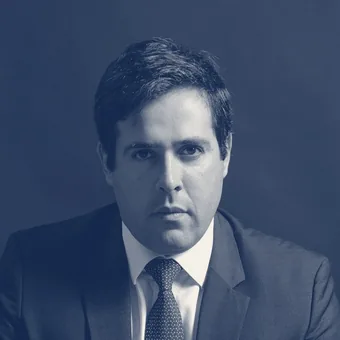
Dr. José Ramalho da Silva Neto
Neurosurgeon specialising in spinal surgery. He graduated in Medicine from the Federal University of Campina Grande (UFCG), completed his residency in Neurosurgery at Hospital da Restauração in Recife, and furthered his training in endoscopic spinal surgery at leading centres in China, Germany and the United States. He is registered with the Regional Medical Councils of Paraíba (7703) and the Distrito Federal (32615), with Specialist Qualification Registration nº 6058. He directs the Instituto da Coluna Dr. José Ramalho Neto, practising in João Pessoa (PB) and Brasília (DF).
His clinical practice gave rise to his fight against irregularities in supplementary health: automated denials, non-medical interference in audits and the imposition of spending caps on treatment. In August 2025 he founded ANDESS, which he chairs, and in December 2025 he launched FPESS in the Chamber of Deputies, of which he is Secretary-General. He is the technical author of PL 2.976/2026 (Legal Framework for Care Integrity, Governance and Sustainability in Supplementary Health), has taken part in hearings before the Chamber's Consumer Protection and Health Committees, and contributed to drafting CFM Resolution nº 2.448/2025. He leads the Procon Saúde network and ANDESS Protege, the national reporting channel, with technical cooperation agreements signed with Procons and Regional Medical Councils, and is the author of the National Letter of Commitment to Ethics in Supplementary Health (2026).
At the invitation of the Taipei Economic and Cultural Office in Brazil, he visited Taiwan to study the National Health Insurance, a universal coverage system internationally recognised for its integration of clinical data, transparency and regulatory efficiency, an experience that has since shaped the data integration and governance agenda of ANDESS and of PL 2.976. He regularly writes technical articles on care integrity, litigation and the regulation of the sector.
State branches and regional coordinators: see the full map of branches →
The symbolism of the ANDESS brand
The coat of arms brings together four elements: the shield, the sword, the eight-pointed cross and the colours, and each of them states what the organisation is: a barrier between the patient and abuse, with the oldest hospitaller tradition in the Western world as its moral reference.
The ANDESS coat of arms
Symbol of the Sovereign Military Hospitaller Order of Saint John of Jerusalem, of Rhodes and of Malta, used since its origins, with Byzantine antecedents and a historical link to Amalfi. Almost a thousand years ago, the Order was born around a hospital in Jerusalem, devoted to caring for the sick, the poor and pilgrims, regardless of origin or religion: a hospitaller tradition that has become one of the oldest institutional legacies of care for the sick still preserved by an organisation in operation. After the Order settled in Malta in 1530, the cross became known as the Maltese Cross. The Order itself associates the eight points with the eight Beatitudes of the Gospel of Matthew and, traditionally, with eight virtues expected of its members. At ANDESS, each point is given a contemporary reading: the eight principles that every member and every Ally undertakes.
Discover the history: from Jerusalem to Malta, the hospitaller origins of the Order →A historical reference, not an affiliation: ANDESS has no connection with the Order of Malta and does not use its official insignia.
Protection: the organisation as a barrier between the beneficiary and abuse, the same shield with which the Hospitallers defended pilgrims and the sick.
The fight, in institutions and in the courts, against practices that violate ethics in health care: the active defence of those who are vulnerable in the face of the system.
Navy blue for trust and institutional seriousness; gold for ethics and excellence.
The eight points of the cross: the eight values of the hospitaller tradition and the ANDESS reading
Eight values
caring for the human being
The eight-pointed cross is a representation historically associated with the Order of Saint John and, later, with the Order of Malta, symbolising values such as loyalty, piety, honesty, courage, honour, contempt for fear, solidarity with the poor and the sick, and respect for the Church.
In a contemporary formulation, ANDESS translates each of them into a principle for supplementary health.
Not the official emblem of the Order of Malta.
| Value inspired by the hospitaller tradition | ANDESS principle | Contemporary meaning |
|---|---|---|
| Loyalty | Loyalty to the patient | The patient's interests, safety and dignity as the fundamental reference points for health care decisions. |
| Piety / mercy | Humanity in care | Recognising that behind every process, authorisation or decision there is a person who needs care, respect and protection. |
| Honesty | Honesty and integrity | Transparent, truthful and upright conduct, without submitting to interests incompatible with the ethics of care. |
| Courage | Courage | The willingness to confront irregularities, report abuse and defend what is right, without fearing reprisals or hesitating in the face of any resistance that may arise in the fulfilment of duty. |
| Honour and glory | Professional ethics | Preserving the dignity of medicine, professional autonomy and the ethical duties inherent in care. |
| Contempt for fear in the face of duty | Contempt for fear in fulfilling the mission | Not allowing pressure, threats, economic interests or power structures to divert the institution from its mission and its principles. |
| Solidarity with the poor and the sick | Protection of patients and the vulnerable | Defending, above all, those who find themselves in a fragile position in the face of care, administrative and economic structures. |
| Fidelity to principles | Defence of human dignity | Recognising the human person as the ultimate purpose of the health system and as the ethical limit of any economic, administrative or technological decision. |
A contemporary reinterpretation inspired by the hospitaller tradition: the ANDESS terms are not attributed to the Order. "Contempt for fear in fulfilling the mission" and "Defence of human dignity" are ANDESS reinterpretations of "contempt for death" and "respect for the Church" (official source of the Order). See the full page on the hospitaller tradition →
The symbols of the Order: a historical reference, not an affiliation
The symbolism and values of ANDESS
In two minutes: the eight-pointed cross, the eight principles and what the brand demands of those who carry it.
Watch on InstagramANDESS in the country's leading media outlets
Permanent archive "ANDESS in the Media": 65 verified articles (2024–2026), from Lauro Jardim's column in O Globo to Jornal Nacional, including UOL, Folha, Record, Exame, Metrópoles, Migalhas and Conjur, as well as the regional press that has followed every complaint since Paraíba. Select a month on the timeline; click on an article to see the cover and a preview of the report without leaving the site.
TV reports, with direct participation by ANDESS
Click to open the report on the broadcaster's website.
Source: "ANDESS na Mídia" database (DOC-031), a compilation verified by ANDESS. Dates marked "s/d" (undated) indicate articles whose publication date is still to be checked in the archive.
ANDESS Academia: knowledge in supplementary health
ANDESS Academia will be the largest forum for discussion of supplementary health in Brazil: a space for the exchange of information between physicians, legal scholars, managers, patients and researchers, with the publication of articles, courses and the dissemination of knowledge in health, regulation and law. Launching soon.
"Know your rights" guides (in preparation)
Straightforward guides in plain language, with a PDF version and a short video.
Coverage denial
What to do in the first 24 hours, the ANS maximum deadlines and how to demand the denial in writing.
Reimbursement
Rules, deadlines and documentation, and how to act in the event of delays and unilateral reductions.
Medical boards and audits
Your rights before the medical board (RN 424/2017) and CFM Resolution nº 2.448/2025.
Premium increases and contracts
Legal limits and the prohibition of financial caps (art. 1, I, Law 9.656/98).
ANDESS News
Daily update on supplementary health
ANDESS News will bring, every day, the most important news in the sector: what is changing in regulation (ANS, CFM, Senacon), the progress of ongoing investigations (MPF, Public Prosecutor's Offices, Procons, TCU) and the legislative agenda, through the work of FPESS. Technical curation, cited sources and plain language.
Interested in sponsoring or taking part: contato@andess.org · In the meantime, follow the press coverage at ANDESS in the Media.
Latest from ANDESS
ANDESS presents diagnosis to the Paraná Health Committee (CNJ · TCU)
"Profit growth at the expense of access": 55 slides with falling loss ratios, record profits, judicialisation and the evidence of auditing without a physician. ANDESS sat on the panel of the Unit's meeting alongside the ANS and the CFM.
National Debate Series on PL 2.976 gets under way
Five segments: civil society, professional councils, consumer protection, operators and the Judiciary, with a technical report to the Chamber by Feb/2027.
ANS replies to RIC 1.098: "it is not the Agency's remit" to regulate outsourced auditing
In 23 answers, the regulator admits it has no data on denials by procedure and plays down "capture" as a "technical debate".
ANS opens investigation into medical boards
The Agency is investigating operators' prior access to medical reports, as covered by UOL/Thiago Herdy.
MPPB opens inquiry in Paraíba
Unimed CG and an audit company under investigation following complaints by ANDESS (Folha/Painel S.A.).
National launch of the reporting channel
Procon Saúde in cooperation with João Pessoa, Salvador, Natal and Porto Alegre; app, portal, QR code and WhatsApp.
Procon Saúde: National Integrated Network for the Protection of Health Service Users
Conceived and designed by ANDESS, Procon Saúde was born in Campina Grande/PB and received an award from the National Council of Justice: it is now becoming a national cooperative network, run on the platform ANDESS Protege, connecting citizens, partner PROCONs and partner institutions, while fully preserving the legal powers of each body.
CNJ Award
Recognised by the National Council of Justice for the social relevance of the model.
Unprecedented suspension
In Feb/2026, Procon-CG suspended AdviceHealth's audit operations, ahead of any federal body.
R$ 8 million
In fines imposed on operators and on the audit company, with recognition from the ANS.
Replicable model
For municipalities with more than 100,000 inhabitants, already in cooperation with João Pessoa, Salvador, Natal and Porto Alegre.
How the network works
ANDESS Protege
24/7 support via the app, portal, QR code and partners. Triage by priority (P0–P3), smart logging and document upload with OCR, always with human oversight of relevant decisions.
Partner PROCON dashboard
Each body receives a structured electronic dossier (summary, timeline, documents, priority) and has its own dashboard: urgent cases, deadlines, recurring issues by company, map and indicators. The administrative decision rests solely with the public authority.
Procon Saúde Observatory
Anonymised, aggregated data becomes public intelligence: complaints by state and municipality, operator, response time, resolution and recurrence, identifying trends before they turn into thousands of lawsuits.
Where ANDESS has organised events and been invited
Institutional agenda in Rio Grande do Sul
Meeting with the board of the Regional Medical Council of RS: complaints presented, support obtained and proposal for technical cooperation; establishment of the ANDESS-RS Unit.
Paraná Health Unit: "Supplementary health: profit growth at the expense of access"
Institutional presentation on a panel that also included the ANS and the CFM; institutional and public versions of the deck.
National Debate Series on PL nº 2.976/2026
Five segments heard: civil society, professional councils, consumer protection, operators and the Judiciary, with a consolidated technical report to the Chamber.
1st Southern Brazil Forum on Pejotização in Medicine, Foz do Iguaçu
The President of ANDESS joined the panel on the dismantling of clinical teams and the precarisation of medical work.
Open floor on the abusive practices of health plans
Public complaint and proposal for a municipal committee to investigate the operators.
Dialogue with the Ministry of Justice and the Federal Court of Accounts
Presentation of the ANDESS diagnosis on denials, outsourced auditing and regulatory failure, incorporated into the replies to RIC 72/2026 and into Ruling 1.120/2026.
Public hearing on health plan abuses and the Unimed Ferj crisis
Human Rights Committee, with OAB-RJ, Procon-RJ and former deputy Carlos Gurgel; complaints about operators and technical support for the debate.
Invitation from the representation of Taiwan in Brazil
Mission to learn about the Taiwanese health system, recognised as among the best in the world, and its data integration technologies.
1st National Forum in Defence of Ethics in Supplementary Health and launch of FPESS
Legal scholars, physicians, members of parliament and civil society; the Front is born with 192 deputies and ANDESS as Executive Secretary-General.
Public hearing on the relationship between users and health plans
With the ANS, Abramge and FenaSaúde: denials, auditing and spending caps.
Public hearing on abusive practices in supplementary health
With FPESS, the CFM (Res. 2.448) and Procon Saúde of Campina Grande.
Public hearing on health plans
Criticism of the spending caps imposed by operators; organisation of the ANDESS Goiás Unit.
★ Institutional agenda
ANDESS branches across Brazil
Coordinators and members of the ANDESS Legal Council in each state: the network that receives ANDESS Protege complaints, supports institutional representations and replicates Procon Saúde in the municipalities.
Click on your state
Click on a state on the map to meet the members of the local branch, all of whom belong to the ANDESS Legal Council, working in their respective branches. States in blue have an active branch or one being set up.
Map of Brazil: branches
ANDESS state coordination teams and legal councils. To join a branch: contato@andess.org.
The map of ethics in supplementary health
Professionals and institutions certified by ANDESS, state by state. Pro dignitate hominis: for human dignity.
The ANDESS Seal recognises those who carry out their activities in supplementary health in an ethical, transparent and effective manner, with a focus on beneficiaries' access to quality health care. Assessment first, annual fee only after approval: the Seal cannot be bought, it must be earned.
Who supports us and who holds the seal, state by state
Click on a state on the map to see the professionals and institutions certified by ANDESS, with their contact details, across the sector's ten participant categories.
Map of Brazil
First certificates of the programme: the ANDESS Board (Selo Ouro) and professionals in the network. The other categories are being launched; applications via contato@andess.org.
All about the Ethics Validation Seal
The three levels
Bronze, Silver and Gold: what each level certifies.
Who can hold the Seal
Ten participant categories and the ethical aspects assessed in each.
Criteria and commitments
What the certified doctor undertakes and demonstrates.
Validation process
Eight stages, from registration to annual renewal.
Rules of use
Governance, independence and correct use of the Seal.
How to join
Registration, assessment and annual fee only after approval.
An ethical ecosystem for supplementary health
"Promoting ethics to guarantee quality health care and defend human dignity." The Seal certifies, as of a specific date, each sector participant's compliance with public integrity criteria.
The ANDESS Seal promotes an ethical ecosystem: an environment in which doctors, clinics, hospitals, suppliers, operators and managers are able to discuss, build, negotiate and carry out their activities in an ethical, transparent and effective manner.
The goal is supplementary health that is ethical, high-quality and sustainable, but, above all, centred on access to high-quality health care for the beneficiary. For companies and organisations, the Seal is a mandatory eligibility requirement for institutional participation in ANDESS, not a commercial benefit: assessment first, annual fee only after approval.
In supplementary health, those who act ethically have no way of standing out
Those who prescribe the right treatment face denials with no named author, medical boards without examinations, bundles that limit materials and pressure to accept spending caps. Those who resist may suffer claim disallowances, removal from networks and retaliation. On the other side, the auditor who decides impartially is confused with target-driven auditing, and the honest company with the one that interferes in prescribing.
Patients, hospitals, managers and the system itself currently have no verifiable way of recognising those who practise, and document, ethical conduct. The result is widespread distrust and litigation.
The Seal addresses this gap. It does not measure technical competence or replace titles, registrations or specialities: it certifies adherence to objective ethical commitments, verified by an independent committee and renewed every year.
Three tiers of commitment, one ethical standard
Validated
Ethical and registration compliance verified: the gateway to the network.
Certified
Quality of care and traceability continuously audited.
Ethical Excellence
The highest standard of governance, transparency and care outcomes.
Each level includes the requirements of the previous one: candidates may join at Level I and progress as the committee verifies their practice. Detailed criteria, weightings and verification methods are set out in the Seal Regulations.
Seal identity
The emblem follows the identity of the ANDESS brands: the shield with the eight-pointed cross, representing the eight ANDESS principles, and the sword, in a minimalist medallion. The metal of the shield indicates the level. On the inner ring, the motto Pro dignitate hominis, "for human dignity", expresses the value that guides the entire ANDESS ecosystem.
Ten participants, one ethical standard
Each participant is assessed on what it does in the chain of care. There is one common thread: no financial, political or personal interference in decisions about the patient's treatment. Below are the ethical aspects verified in each category.
ASD clinics
- Individual therapeutic plan, drawn up and reviewed by a qualified team
- Prescribed hours delivered and recorded, with no cuts due to caps or bundles
- Proven training of therapists and progress records accessible to the family
- Billing only for what was delivered, with no off-the-books charges
Business owners and suppliers of materials
- Anvisa registration, traceability and transparent pricing
- Transparency in compliance
- No interference in medical acts for financial purposes, promises of gain or any kind of incentive
- Public declaration of relationships with professionals and institutions
- No exclusivity agreements restricting the doctor's choice
Hospital networks
- Group governance and compliance, with a protected whistleblowing channel
- No agreements with operators imposing bundles or caps on prescriptions
- Transparency of contracts, fees and OPME prices
- The same ethical standard across all units of the network
Doctors and medical clinics
- Evidence-based prescribing and independence of the medical act
- Public compliance declaration of any incentive or support received
- Three manufacturers, without requiring a brand; auditor always identified
- Advertising in line with CFM rules and protection of patient data
Dentists and dental clinics
- Well-founded recommendations and a written treatment plan
- Transparent quotes and materials, with no off-the-books charges
- Dental audits identified and with prior contact
- Conduct and advertising in line with the Code of Dental Ethics
Imaging clinics
- Report signed by an identified doctor, with RQE
- Documented equipment quality and maintenance
- Delivery deadlines met, with no unnecessary repeat examinations
- No quotas or bundles interfering with the recommendation of examinations
Laboratories
- Identified technical director and quality control
- Sample traceability from collection to report
- Reports on time, with results accessible to the patient
- No incentives for those who request tests
Lawyers and health law firms
- Practice in line with the OAB Code of Ethics, with transparent fees, confidentiality and LGPD compliance
- No improper solicitation of clients or paid referral partnerships
- Tackling abusive practices in the sector, with claims grounded in medical reports
- Commitment to bring before the Public Prosecutor's Office and other institutions any matters requiring their action
- Promoting ethical practices among other players in the sector
Hospitals
- The attending doctor's prescription respected, with no imposed standardisation of materials
- Active technical director, accountable to the CRM
- Patient safety and transparency of prices and fees
- No retaliation against doctors who record denials or complaints
Health plan operators
- Denials in writing, reasoned and with an identified auditor (name, CRM, RQE)
- A proper medical board in cases of disagreement and service deadlines met
- Coverage without financial caps (Law 9.656/1998) and without bundles imposed on prescriptions
- Auditors not paid per disallowance and no automated decisions without a doctor
Ethics that can be proven
The Seal recognises, as of a specific date and on public criteria, doctors who practise medicine with independence, transparency and commitment to the patient: attending doctors, auditors, medical examiners or technical directors. It is neither a title nor a technical certification.
Bronze · Validated
- Active CRM registration in good standing; RQE when advertising a speciality
- No current ethical sanction
- Public compliance declaration: any incentive or support received, with no interference in the medical act
- Formal acceptance of the commitments and LGPD consent form
Silver · Certified
- Sample-based document verification: requests, reports and opinions
- Technical justification and three manufacturers, without requiring a brand
- Auditors: opinions identified and with prior contact
- Training through ANDESS Academia; no upheld complaints
Gold · Ethical Excellence
- Compliance declaration updated and verified
- Quality and outcome indicators monitored
- Auditors: 100% of opinions identified, with a medical board in cases of disagreement
- Institutional contribution: technical opinions, teaching or research
Attending doctor
- Prescribe on the basis of evidence and record the indication in full.
- Provide technical justification for every procedure and every material requested.
- Name at least three manufacturers, without requiring a brand or exclusive supplier (RN ANS 424/2017, art. 7; CFM Res. 1.956/2010).
- Publicly declare any incentive or support that may be received: a public compliance declaration.
- Not allow financial, political or personal interference in the medical act.
- Preserve patient confidentiality and data (LGPD) and advertise within CFM rules (Res. 2.336/2023).
- Help tackle the documented irregularities and unethical conduct in the sector, recording unjustified denials, imposed bundles and coercion in ANDESS Protege.
Medical auditor and examiner
- Identify themselves by name, CRM and RQE in every opinion (CEM, art. 11).
- Contact the attending doctor before disagreeing and communicate the disagreement in writing (CFM Res. 1.614/2001, art. 8).
- Decide case by case, on the basis of rules and evidence, never according to targets, bundles or caps.
- Refuse remuneration linked to disallowances (CEM, art. 96).
- Act with absolute impartiality and within their remit (CEM, arts. 97 and 98).
- Not sign an opinion without personally analysing the case (CEM, art. 92).
- Refer technical disagreements over care to a medical board (RN ANS 424/2017).
- Refuse automated decisions without human medical assessment.
Technical and clinical directors also undertake the duty to ensure that every audit decision of the institution has an identified doctor and to prevent denial or disallowance targets (CFM Res. 2.147/2016).
The Seal cannot be bought, it must be earned
Inviolable rules
- Payment covers assessment and monitoring; it never guarantees an award.
- Public criteria and regulations, the same for everyone.
- Validation Committee made up of independent doctors and lawyers.
- No assessor decides a case to which they have a connection; the ANDESS Presidency does not deliberate on cases in which it has an interest.
The Seal shields no one
- Certified members may be reported and investigated in the normal way by ANDESS Protege and the competent authorities.
- An upheld complaint leads to suspension or revocation, made public.
- The Seal neither replaces nor interferes with the powers of the professional councils, the ANS or the Judiciary.
Rules of use
- It is not a title, a speciality or a certification of technical competence.
- Always displayed with its level, validity and public verification on the ANDESS Brazil Map.
- Advertising in line with the rules of each professional council (for doctors, CFM Res. 2.336/2023), with no promise of results or comparison with colleagues.
- Use is prohibited during suspension or after revocation.
Investment
- Assessment fee, non-refundable and with no guarantee of award.
- Annual maintenance fee according to the current schedule for each category, provided at registration.
- The annual fee is only payable after approval.
- For companies and organisations, the Seal is an eligibility requirement for institutional participation in ANDESS.
Verifiable recognition and institutional backing
Public recognition
Listing on the ANDESS Brazil Map, with category, state, level and validity of the Seal, for consultation by patients, hospitals and managers.
Backing in the face of abuse
Priority channel in ANDESS Protege to record denials with no named author, imposed bundles, disallowances and retaliation, with technical analysis and referral to the competent authorities.
Training and network
Access to ANDESS Academia (ethics, auditing and authorisation) and to the national network of certified members and state branches.
Institutional voice
Participation in drafting proposals with FPESS and PL 2.976/2026, the Legal Framework for Care Integrity.
Examples from the certified network, state by state
Certified members are listed on the ANDESS Brazil Map and presented as ethically certified by ANDESS, with category, state, level and Seal status (current, under renewal or under assessment). Click on a category or a state to open the full map.
Certified network in Brazil
First certificates: the ANDESS Board (Selo Ouro) and professionals in the network. Other categories: launching soon.
Is the Seal a title or a technical certification?
No. The Seal certifies, as of a specific date, adherence to verified ethical commitments. It does not measure technical competence and does not replace titles, registrations, specialities or accreditations.
Who assesses and decides?
The Ethics Validation Committee, made up of independent doctors and lawyers. The rapporteur may have no connection with the candidate, and every decision is reasoned and open to appeal.
Does paying guarantee the Seal?
No. The fee covers the assessment and is non-refundable. The annual fee is only payable after approval.
Can Seal holders be reported?
Yes. Complaints recorded in ANDESS Protege are investigated with the right of defence; if upheld, they lead to public suspension or revocation.
Can I use the Seal in my communications?
Yes, always with its level, validity and a link to the public verification on the ANDESS Brazil Map, and within the advertising rules of your professional council.
How often is the Seal renewed?
Every year, with fresh verification. The level may go up, be maintained or, in the event of an upheld complaint, be suspended or revoked.
 ANDESSFPESS
 ANDESS Protege
ANDESS Protege + Procon Saúde
The ANDESS digital platform for protecting health service users, free for consumers and available 24 hours a day, 7 days a week. A door before the courts: it turns individual complaints into resolution, oversight and collective intelligence.
A door before the courts
ANDESS Protege is the gateway to the National Integrated Network for the Protection of Health Service Users (PROCON SAÚDE): it receives your request, turns your account into a structured case (documents, timeline and technical classification) and refers it to the competent body, partner PROCONs, the ANS, the Public Prosecutor's Office, while fully preserving the legal powers of each institution.
Principle: connect, not replace: technology prepares, qualified people decide. Every document receives two stamps, technical and legal; the operator is notified and must authorise or sign the denial with a name, CRM and grounds, within a deadline; when the auditor does not identify themselves, responsibility is attributed to the technical director. Each complaint generates five simultaneous outputs: ethical (CRM), administrative (Procon), regulatory (ANS/NIP), extrajudicial notice and a final report to the patient, and feeds the collective intelligence of the Procon Saúde Observatory.
National launch: November 2026. Access via app, portal, QR code, WhatsApp and partners; Procon Saúde already in cooperation with João Pessoa, Salvador, Natal and Porto Alegre; a channel dedicated to employer companies.
Discover the full project: Institutional Paper →
Public complaint and response from operators
In addition to the institutional referral, a complaint filed with ANDESS Protege may, at the complainant's choice and with their express authorisation, be published on the portal, with personal and health data protected, and with a demand for a public response from the respondent: health plan operator, hospital, auditing physician, service provider or supplier. The response, or the silence, is recorded alongside the complaint, with the deadline and history visible to all.
The reporting channel in the palm of your hand
ANDESS ProtegeANDESS Protege in 5 steps
Registration → classification → type → identification of the doctors (denials) → account with attachments. Protocol number issued instantly.
Concise content
A condensed, interactive version of the website: rights, ethics seal, FPESS, news and local chapters.
Case tracking
Protocol timeline: triage, guidance, referrals (ANS/NIP, Procon, MP) and outcome.
Dedicated channel, own data and independent oversight
Contracting companies offer their employees a dedicated reporting channel. ANDESS acts as the oversight body and quality guarantor, and returns intelligence: claims ratio metrics and outcomes to compare against the figures presented by the operator.
- Reporting channel dedicated to employees, integrated with ANDESS Protege.
- Own dashboard with complaints, operator response times and outcomes.
- Claims ratio intelligence to compare against the figures presented by the operator.
- Healthcare rating of the operators in the portfolio, with a public methodology and anonymised data.
Would you like to join the group of founding companies? Get in touch with ANDESS.
Supporters, allies and donations
ANDESS receives no public funding
ANDESS is funded entirely by donations, technical partnerships and collaboration with the private sector. It receives no money from health plan operators or medical audit companies. Every documented complaint, every public hearing and every legal filing is sustained by people who believe that healthcare cannot have a spending cap.
Donations via PIX

Payee: ANDESS · National Alliance for the Defence of Ethics in Supplementary Health
Brasília/DF · identifier ANDESSApoie
Automatic receipt and half-yearly public accountability report. Card and recurring direct debit coming soon.
Supporters and allies
Medical bodies, patient associations, partner law firms and institutional sponsors. Showcase with support categories and an annual transparency report.
Contact ANDESS
Headquarters
SIG Quadra 4, Lote 75, Bloco C, Ed. Capital Financial Center, Brasília/DF, CEP 70.610-440.
Emails
State branches
Contacts by state on the page Branches.
Follow us on social media
Connect with ANDESS and FPESS.
Parliamentary Caucus for the Defence of Ethics in Supplementary Health
192 federal deputies, from across the political spectrum, united for healthcare integrity, medical autonomy and the protection of the more than 50 million health plan beneficiaries.
What a parliamentary front is: and how it works
What it is
A cross-party association of parliamentarians formed to promote debate on, and the improvement of, legislation on a matter of public interest.
Regulatory basis
Registered in the Chamber under Ato da Mesa nº 69/2005, which requires the membership of at least one third of the members of the House. FPESS brings together 192 signatory deputies (DCD 10/12/2025).
What it does
Public hearings, requests for information, notifications to oversight bodies and support for bills, with ANDESS in the Executive Secretariat-General.
How FPESS works
Oversight and control
Requests for Information (RIC nº 1.098/2026 and supplementary request), submission to the TCU (Federal Court of Accounts) (TC 005.678/2025-0), notifications to the CFM and a request for the investigation and suspension of AdviceHealth filed with the ANS.
Legislative agenda
Support for PL nº 2.976/2026, requests for public hearings in the CFFC and coordination of the Civil Framework for Supplementary Health with ANDESS.
Positions and members
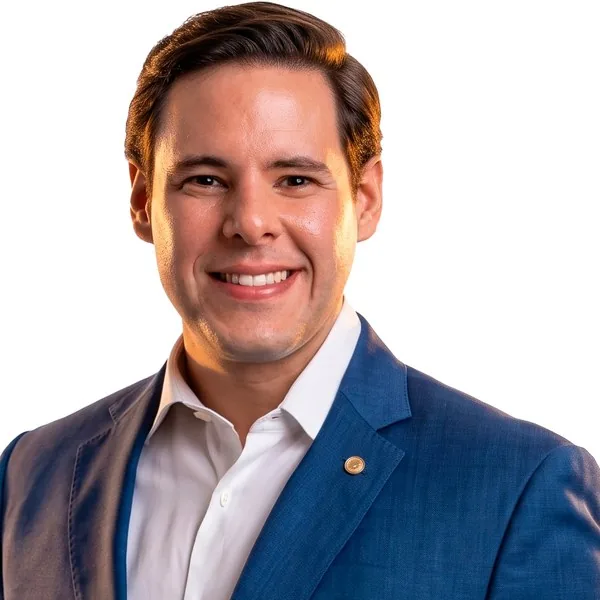
Dep. Rodrigo Valadares (PL/SE)
Author of RIC nº 1.098/2026 and of the request for the Parliamentary Inquiry (CPI) into Medical Audits.

Dep. Fernando Marangoni (Podemos/SP)
Lawyer; author of PL nº 2.976/2026, the Legal Framework for Healthcare Integrity.
Dr. José Ramalho da Silva Neto
Neurosurgeon, president of ANDESS, the Front's technical body.
192 signatory deputies: support for FPESS, state by state
Click on a state to see the federal deputies who signed up to the Front. The intensity of the blue shows the number of signatories in each state's delegation.
Map of Brazil: FPESS signatories by state
Registration in the Chamber of Deputies (DCD of 10/12/2025, 192 signatories). List of names by state loaded from the Chamber's Open Data database (front nº 55705), which reflects the Front's current membership.
The launch of the Front
The full agenda of hearings, forums and institutional meetings is in the tab Events and agenda →
A word from the President of the FPESS
At the 1st National Forum in Defence of Ethics in Supplementary Health, in the Chamber of Deputies, Federal Deputy Rodrigo Valadares (PL/SE), president and coordinator of the Front, sets out the FPESS commitment: to confront wrongful denials, outsourced auditing and regulatory failure, with ANDESS as Executive Secretary-General.
View on Instagram ↗Diagnosis of supplementary health
The more the sector profits, the more it denies. The official figures underpinning ANDESS's work, each with a primary source, reference date and update frequency.
Three curves that should not move together
Between 2022 and 2025 the claims ratio fell from 85% to 78%, the number of beneficiaries grew by 10.9% and operators' net profit leapt from R$ 0.6 billion to R$ 24.4 billion. Over the same period, complaints to the ANS tripled and litigation against health plans came to exceed litigation against the SUS (public health system).
85% → 78% (2022–2025): operators spend proportionally less on care.
R$ 0.6 bn → R$ 24.4 bn: +120.7% in 2025 alone; the highest result since 2018.
32 thousand complaints to the ANS in 2024; 34,793 on consumidor.gov.br in 2025; 181 thousand lawsuits in the 1st half of 2026.
53 million Brazilians: a quarter of the population
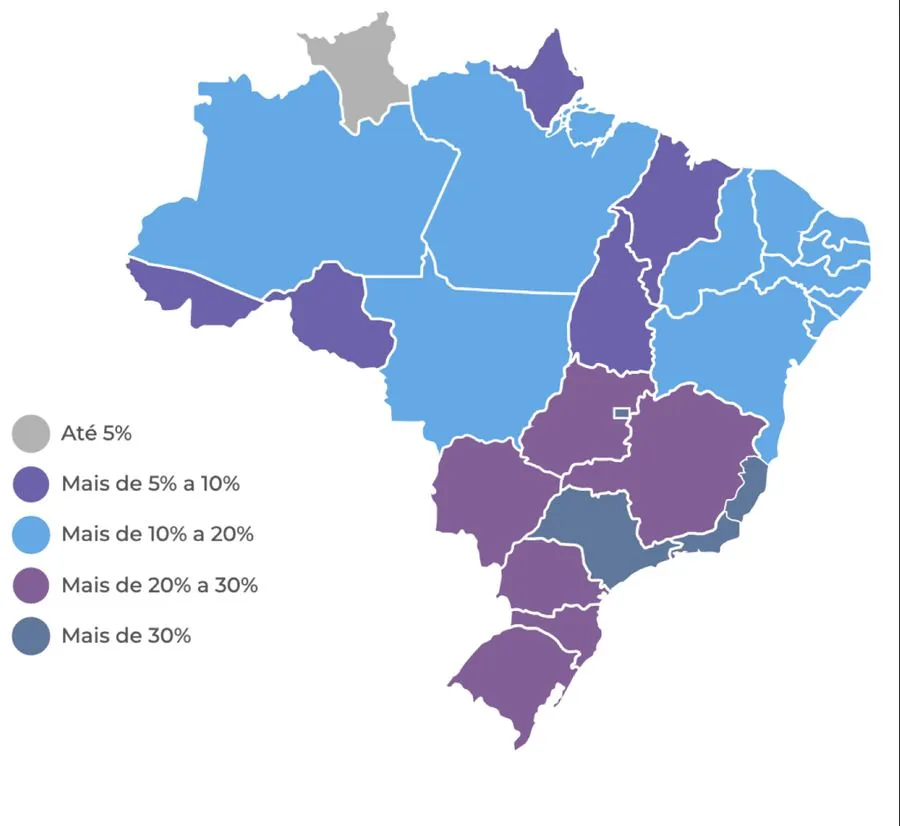
The largest profit in the sector's history
Peak in 2022, steady decline ever since
The queue of complaints has exploded
The federal government confirms: wrongful denial is the leading cause of complaints against health plans
In an official reply to the Chamber of Deputies, the National Consumer Secretariat (Senacon) recorded the highest volume of complaints in its 12-year historical series, with the refusal of procedures, medicines and treatments prescribed by doctors ahead of every other reason. It is the same pattern that ANDESS has documented and denounced since 2024.
Jornal Nacional, 19/02/2026: "Complaints against health plans and operators reach their highest level in 12 years". Source: TV Globo / g1. View on Instagram ↗
Audit identifies failings and low effectiveness in ANS regulation
- restrictions on the Agency's financial autonomy and operational capacity;
- revenue from fees and fines paid into the Treasury and subject to spending freezes;
- low effectiveness of quality programmes and of the integration of healthcare data;
- regulatory uncertainty and rising litigation: 170.8 thousand lawsuits in 2022, 303.1 thousand in 2024;
- an action plan ordered within 180 days.
What the regulator admitted to the Chamber
- 1.542.583 NIP complaints between Jul/2021 and May/2026, an average of 26.145 per month;
- ANS systems do not classify denials by procedure;
- "it is not the Agency's remit" to regulate outsourced medical auditing.
More lawsuits against health plans than against the SUS
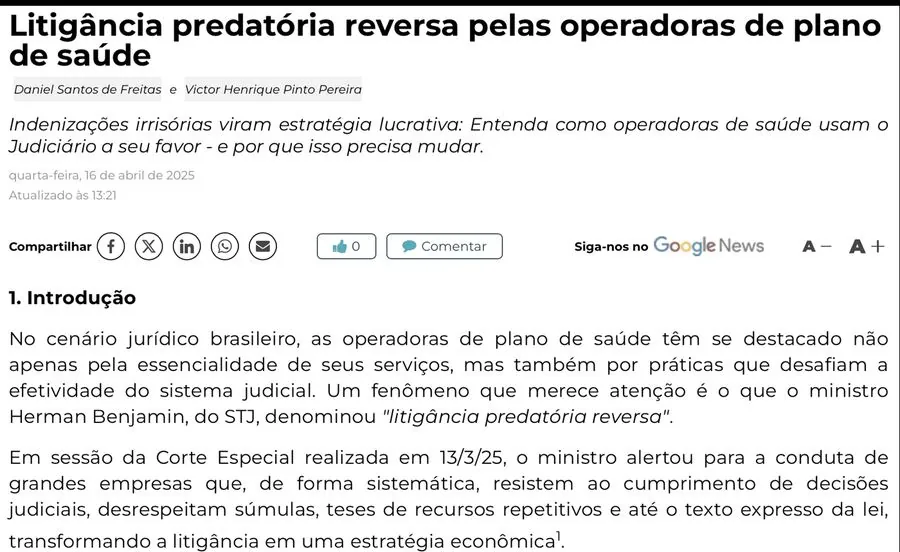
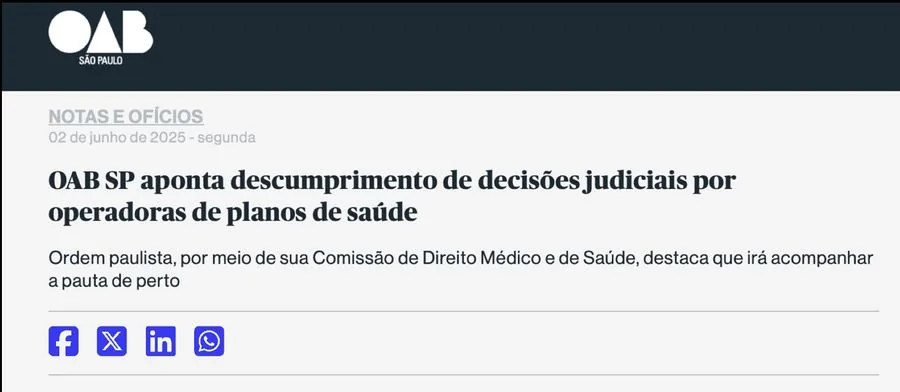
What external oversight found
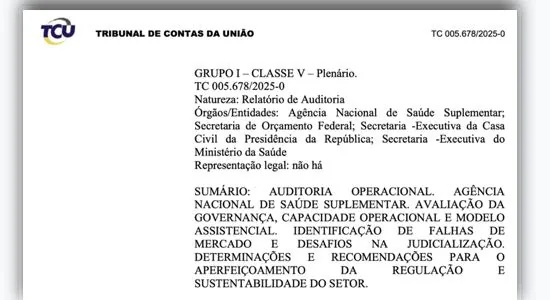
Update schedule for sector data
No figure goes on the website without a primary source, reference date and frequency. Indicators with a reference older than twelve months are marked "update". Curation: ANDESS Research / Observatory.
| Indicator | Primary source | Frequency | Latest reference | Next update | Status |
|---|---|---|---|---|---|
| Beneficiaries and coverage by state | ANS: Situation Room / Open Data | Monthly (quarterly consolidation) | Jul/2025 | Oct/2026 | current |
| Operators' net profit | ANS: DIOPS / financial statements | Quarterly (annual close in March) | 2025 (annual) | Q3/2026 · Nov/2026 | current |
| Claims ratio | ANS: economic and financial dashboard | Quarterly | 2025 | Q3/2026 · Nov/2026 | current |
| Cumulative IPCA (deflator) | IBGE | Monthly | 2025 | monthly | current |
| Complaints to the ANS (NIP) | ANS: oversight dashboards; RIC 1.098/2026 | Monthly | 2024 (series) · May/2026 (NIP) | Oct/2026 | update |
| Complaints on consumidor.gov.br | MJSP/Senacon (RIC 72/2026) | Annual, with a half-yearly cut-off | 2025 | Feb/2027 · cut-off Sep/2026 | current |
| Litigation against health plans | CNJ: right to health dashboard; TCU Acórdão 1.120/2026 | Half-yearly | 1st half 2026 | Jan/2027 | current |
| Operational audit of the ANS | TCU: TC 005.678/2025-0 | Per ruling / monitoring | May/2026 | action plan (180 days) · Nov/2026 | current |
| Deputies in FPESS | Chamber of Deputies: Open Data (front 55705) | Monthly | 22/09/2026 | Oct/2026 | current |
| "ANDESS in the Media" clippings | Database DOC-031 | Ongoing (monthly review) | Sep/2026 | Oct/2026 | current |
| Filed proceedings | ANDESS archive: Case portfolio | With each filing (monthly review) | Sep/2026 | Oct/2026 | current |
Legal Framework for Healthcare Integrity
701 articles in 34 titles. Denial of care ceases to be a low-cost administrative decision and becomes an act subject to burden, medical oversight and accountability, with the crime against human dignity in healthcare and SUASS, the unified authorisation system with a double-blind panel.
Legal Framework for Healthcare Integrity
Legal Framework for Healthcare Integrity, Governance and Sustainability of Supplementary Health
For the first time, deliberately denying care becomes a crime against human dignity
PL 2.976/2026 criminalises the creation or maintenance of an operational model designed to hinder, delay, restrict or prevent patients' access to care, covering doctors, nurses, managers, administrators, directors or technical leads, and treats it as a heinous crime when it results in death, permanent disability or irreversible deterioration (art. 638).
The main axis: five fronts of action
The model imposed by operators rests on five practices, which the bill tackles head-on: the main cause of the explosion in lawsuits against health plans.
The architecture of principles
Life above profitability
The core principle of the Legal Framework: no financial metric justifies the denial of due care.
Reversal of the burden of proof
It is for the operator to demonstrate the technical lawfulness of the denial, not for the beneficiary to prove their right.
Tacit approval
The operator's silence within the deadline amounts to authorisation. Time ceases to be a weapon of attrition.
Immediate effect
Beneficiaries' rights take effect immediately, with 180 days for the ANS to regulate their implementation.
The crime against human dignity in healthcare
Art. 637: to promote, authorise, implement or maintain, as a doctor, nurse, manager, administrator, director or technical lead, an operational model deliberately designed to hinder, delay, restrict or prevent patients' access to healthcare.
Art. 628: abusive and repeated denial: imprisonment of 2 to 6 years. Arts. 632–633: fraudulent denial with serious risk and fraud in automated systems.
International projection: presentation to the WHO and the Inter-American Court of Human Rights as a model of accountability.
Integrity and inviolability of the medical act
Decisions on treatment and complexity return to the qualified doctor, not the financial manager. Commercial interference in the medical act now carries criminal consequences.
Technical dialogue
Art. 380: direct auditor–attending physician contact as a condition of validity; without dialogue, the denial is void and coverage is presumed due.
Protection of the attending physician
Arts. 268–270: operators may not remove from the network or pressure professionals for technically justified recommendations.
RQE and complexity
Recommendation of medium- and high-complexity procedures linked to recognised specialist certification, without turning specialisation into a market barrier.
Interference is a crime
Art. 637 §1: anyone who, for financial motives, interferes in the medical act and compromises patient safety incurs the same penalties. Title XVII, inviolability of the medical act.
National minimum for medical fees in supplementary health
Degraded fees, detached from the cost and complexity of the act; packaging and bundling codes reduce remuneration from within; intermediated billing.
National minimum referenced to the CBHPM (Art. 384), remuneration never lower than 130% of SUS values (Art. 385) and direct billing of fees to the professional.
Art. 384: CBHPM as the mandatory reference; negotiation of base year and factors is permitted, while models that distort the remuneration of the act or lead to precarisation are prohibited (§1). § 2º: prohibition of artificial bundling codes, the consolidation of procedures under a single code, the packaging of fees and any mechanism for reducing remuneration.
Art. 386: valuing medical work is not a corporate interest: it is a requirement for protecting the patient, the quality of care and the sustainability of medicine; using supplementary health as an instrument of precarisation is prohibited. Direct negotiation: encouraging negotiation between doctors, hospitals and operators, eliminating the middleman and captive prescribing by vertically integrated networks.
SUASS: Unified Authorisation System for Supplementary Health
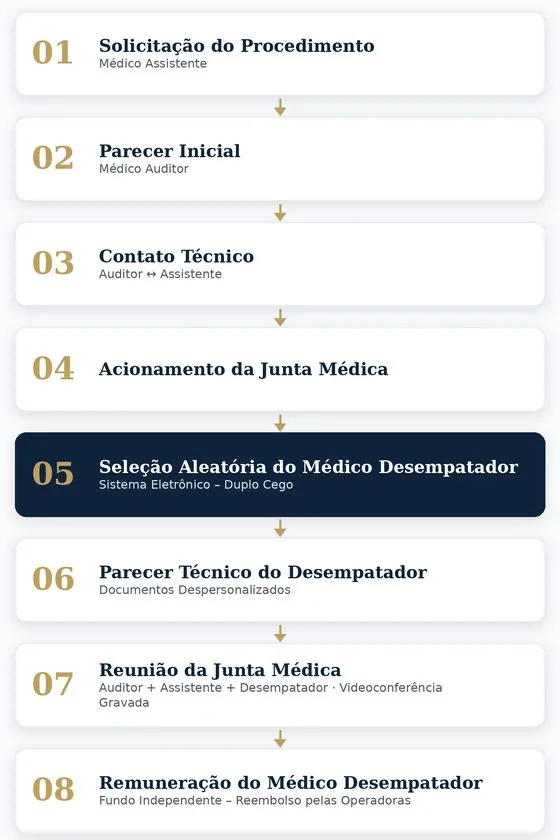
A single, national, electronic and auditable platform for all authorisation and auditing in supplementary health: full traceability of care processes, an end to the anonymous auditor, beneficiary access to their own data, opinions and those responsible, and an independent technical panel in a double-blindsystem, with a decision within 72 hours.
Central idea: to take authorisation of procedures out of the operator's exclusive hands and submit it to a single, electronic and auditable system, with a medical panel in a double-blind model, the tie-breaker is drawn by lot, not chosen, from a pool of specialists nominated by the professional societies, and is paid by an independent fund.
- Auditor always a doctor and identified (Law 12.842/2013; CFM Res. 2.448/2025).
- Mandatory technical contact between auditor and attending physician before any denial.
- Tie-breaker chosen by random electronic selection, with depersonalised documents.
- Direct interface with the professional societies: the panel doctor is drawn from a pool of professionals listed by the specialty societies, so the technical decision returns to those with the expertise, not to those who pay the bill.
- Recorded meeting; remuneration from an independent fund, reimbursed by the operators.
ANDESS proposal: Draft Resolution on Auditing and Medical Panels, under consideration.
The panel belongs to the specialty, not the operator
Medical specialty societies (AMB and its affiliates) become the source of the national pool of tie-breaking doctors: they list qualified professionals, keep the register up to date and answer for their technical integrity. SUASS draws the panel doctor from this pool in a randomised and auditable way, never from a list provided by the operator or the outsourced auditor.
Why it matters: decisions on care return to those with expertise in the specialty, and the professional society becomes jointly responsible for the integrity of the system.
Full traceability
Authorisation, auditing and review recorded on a national platform; risk-based supervision; an end to the anonymous auditor and unrecorded decisions (Title VII, Chs. I–VI).
Independent technical panel
Title VI: clinical disagreements resolved by a panel in a double-blind system, with a decision within 72 hours, independent of the operator; today the appeal is reviewed by whoever issued the denial.
Empowering the beneficiary
Access to their own data, opinions and the identity of those responsible (Art. 108 §1); integration with the ANS (Ch. VI) and public indicators (Ch. IV).
Principles (Art. 108 §2): health protection, patient safety, responsible interoperability, data protection, regulatory proportionality and beneficiary access to their own data. Auditor always a doctor and identified (Law 12.842/2013; CFM Res. 2.448/2025). ANDESS proposal: Draft Resolution on Auditing and Medical Panels, under consideration.
A direct response to the vacuum the ANS itself acknowledged in reply to RIC nº 1.098/2026: today no one regulates, oversees or even receives complaints about outsourced auditing.
Accountability in three spheres: bidirectional and proportionate
Civil
Full compensation, with reversal of the burden of proof (Art. 6) and presumed moral damages for abusive denials posing a risk to health (Title XXIX).
Administrative
ANS sanctions; reimbursement to the SUS with automated assessment; repeat offences are aggravating (Title XXVIII).
Criminal
Framework of Arts. 628–638, with the crime against human dignity (Art. 637) classed as heinous (Art. 638).
Before and after PL 2.976
What changes for each link in the care chain when denial ceases to be a low-cost administrative decision.
Where PL 2.976/2026 stands
Filed with the Bureau of the Chamber of Deputies on 09/06/2026 (701 articles in the official text). Its progress is monitored by FPESS, with technical advocacy from ANDESS and international engagement with the WHO and the Inter-American Court of Human Rights.
Nereu Ramos Auditorium, Chamber of Deputies, 192 signatory deputies.
completedHearings in the Consumer Protection and Health Committees; request for the Parliamentary Inquiry (CPI) into Medical Audits (174 signatures).
completedIntroduced by Dep. Fernando Marangoni; progress through the committees, technical advocacy and the National Debate Cycle (Sep/2026–Feb/2027).
current stageConsolidated technical report from the Cycle to the Chamber; coordination with Medical Councils, Procons, the Judiciary and ANDESS state chapters.
next stagePolicy Paper and full text
The Policy Paper and the full text of the bill, to read and download.
Policy Paper on PL 2.976/2026 · v2
ANDESS · FPESS · 24/08/2026 · 23 pages. Technical grounds, cross-references checked article by article and a summary of the pillars of the Legal Framework.
PL nº 2.976/2026 in full
Chamber of Deputies · introduced on 09/06/2026 · Dep. Fernando Marangoni · 347 pages. Legal Framework for Healthcare Integrity, Governance and Sustainability of Supplementary Health.
Who is leading the Legal Framework
The proposal arises from the convergence of parliamentary leadership and technical grounding.
Federal Deputy Fernando Marangoni
Lawyer and Federal Deputy for São Paulo; leads the political authorship of the Legal Framework in the Chamber of Deputies.
Dr. José Ramalho da Silva Neto
Neurosurgeon and spine surgeon (UFCG; Hospital da Restauração; endoscopic training in China, Germany and the USA); responsible for the technical grounding of the bill and for ANDESS's institutional coordination.
Summary of the official Policy Paper (working document in support of the legislative process); the final page will feature the full bill, the ANDESS technical opinion and the stage of the legislative process in real time.
A centuries-old tradition of protecting the sick
Almost a thousand years ago, a community organised around the Hospital of Saint John in Jerusalem took on a mission that would span centuries: to welcome, care for and protect the sick. Centuries have transformed medicine; the duty to place the human person at the centre of care remains.
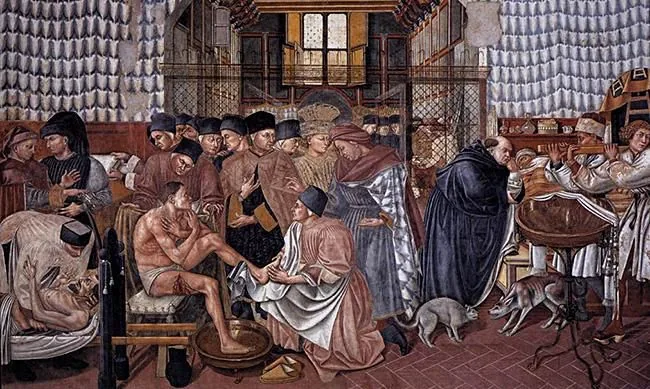
Background: Domenico di Bartolo, Care of the Sick, 1441–1442, Santa Maria della Scala, Siena. Reproduction: Wellcome Collection, Public Domain.
The sick at the heart of the mission
The Order of Saint John has its origins in the second half of the 11th century, in Jerusalem. Merchants from the Republic of Amalfi obtained permission to establish a church, a convent and a hospital dedicated to caring for pilgrims, regardless of their origin or religion. Under the leadership of the Blessed Fra' Gérard (Gerardo), the Hospitaller community took shape; in 1113, Pope Paschal II formally recognised the Order with the bull Pie postulatio voluntatis, placing the Hospital under papal protection and recognising its autonomy.
Excavations in the Old City of Jerusalem have identified remains of the great hospital of the Hospitallers, described as the largest hospital establishment of its era found in the Middle East; institutional accounts speak of wards organised according to patients' conditions and, in exceptional circumstances, some 2,000 people cared for. It is one of the oldest and most enduring institutional traditions of caring for the sick in the West: still preserved by an active organisation.

From medieval testimony to institutional continuity
Welcome, care for and protect
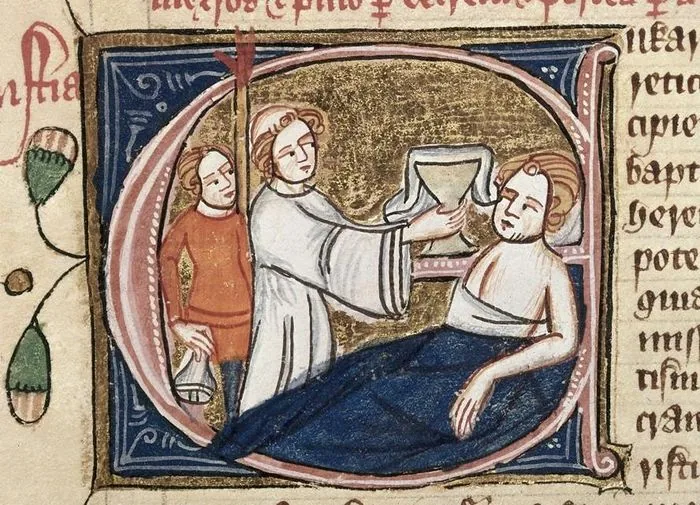
The Hospitallers made service to the sick their very reason for being: they called the sick "our lords, the sick" and devoted themselves to them with a vow of service. The hospital in Jerusalem took in patients of different religions and origins; care did not depend on who the patient was, but on what they needed.
The Order's mottoTuitio fidei et obsequium pauperum, the defence of the faith and service to the poor and the sick, sums up the order of priorities that ANDESS carries over into supplementary health: what matters is the need of those who suffer, not the interest of those who pay.

History and values of a symbol
The white eight-pointed cross has ancient origins, probably Byzantine, and was associated with Amalfi before being adopted by the Hospitallers. After the Order settled in Malta in 1530, the symbol became widely known as the Maltese Cross. The Order itself relates its eight points to the eight Beatitudes and to eight virtues: loyalty, piety, honesty, courage, honour and glory, contempt for death, solidarity with the poor and the sick and respect for the Church.
The Order has more than one official symbol: the State flag bears a white Latin cross on a red background; the flag of the hospitaller works and the emblem of the medical and humanitarian activities use the white eight-pointed cross on a red background.
From historical virtues to the ANDESS principles
Centuries have transformed medicine. New technologies, institutions, health systems, economic relationships and new ways of organising care have emerged. One principle, however, remains: the sick person must be at the centre of care. The list below is a contemporary reinterpretation inspired by the Hospitaller tradition; the ANDESS terms are not attributed to the Order of Malta.
Eight values
caring for the human being
The eight-pointed cross is a representation historically associated with the Order of Saint John and, later, with the Order of Malta, symbolising values such as loyalty, piety, honesty, courage, honour, contempt for fear, solidarity with the poor and the sick, and respect for the Church.
In a contemporary formulation, ANDESS translates each of them into a principle for supplementary health.
Not the official emblem of the Order of Malta.
| Value inspired by the hospitaller tradition | ANDESS principle | Contemporary meaning |
|---|---|---|
| Loyalty | Loyalty to the patient | The patient's interests, safety and dignity as the fundamental reference points for health care decisions. |
| Piety / mercy | Humanity in care | Recognising that behind every process, authorisation or decision there is a person who needs care, respect and protection. |
| Honesty | Honesty and integrity | Transparent, truthful and upright conduct, without submitting to interests incompatible with the ethics of care. |
| Courage | Courage | The willingness to confront irregularities, report abuse and defend what is right, without fearing reprisals or hesitating in the face of any resistance that may arise in the fulfilment of duty. |
| Honour and glory | Professional ethics | Preserving the dignity of medicine, professional autonomy and the ethical duties inherent in care. |
| Contempt for fear in the face of duty | Contempt for fear in fulfilling the mission | Not allowing pressure, threats, economic interests or power structures to divert the institution from its mission and its principles. |
| Solidarity with the poor and the sick | Protection of patients and the vulnerable | Defending, above all, those who find themselves in a fragile position in the face of care, administrative and economic structures. |
| Fidelity to principles | Defence of human dignity | Recognising the human person as the ultimate purpose of the health system and as the ethical limit of any economic, administrative or technological decision. |
Note on historical accuracy: "Contempt for fear in fulfilling the mission" and "Defence of human dignity" are ANDESS reinterpretations; the Order's official source uses "contempt for death" and "respect for the Church", respectively.
Blessed Gérard in the Hospital of Jerusalem

Blessed Gérard + Hospital of Jerusalem + care of the sick
The painting brings together, in a single scene, the elements that underpin the narrative of this page: the founder of the Order of Saint John personally caring for the sick in the Hospital of Jerusalem, the Hospitaller origin of the tradition that ANDESS takes as its reference. The Order of Malta itself uses the work to tell its origin story, under the title "Blessed Gérard in the Hospital of Jerusalem". The same Oratory holds a second painting by Preti of the founder, "The Blessed Gerard and the Miracle of the Loaves".
Source: St John's Co-Cathedral Foundation · reproduction published by the Order of Malta, American Association (orderofmaltaamerican.org).
The duty to protect the sick remains.